Cultural Preservation in Comoros: Balancing Tradition and Modernity
The Comoros archipelago, a cluster of volcanic islands situated off the eastern coast of Africa between Madagascar and the African mainland, is a melting pot of diverse cultures, languages, and traditions. With its strategic location at the crossroads of the Indian Ocean, Comoros has long been a hub of global trade, attracting merchants, explorers, and settlers from Africa, the Middle East, Europe, and Asia. These influences, combined with the indigenous African culture, have fostered a rich and unique cultural heritage. However, in recent decades, this heritage faces growing challenges as the islands are rapidly transforming under the forces of globalization, migration, and technological advancements. The critical question facing the Comoros today is how to strike a balance between preserving the unique cultural identity of the islands and embracing modernity .
Historical Context: A Confluence of Cultures
To understand the significance of cultural preservation in Comoros, one must first appreciate the complex historical dynamics that have shaped the islands' culture. The Comoros islands were historically settled by Bantu-speaking people from the African mainland, followed by the arrival of Austronesian traders from Southeast Asia. However, it was the waves of Arab traders and settlers that had the most profound impact on Comorian culture. By the 10th century, Islam had become a dominant force on the islands, influencing everything from religious practices to architecture, music, and social customs.
Islamic culture in Comoros was uniquely blended with African traditions, forming a Swahili-Arabic identity that is still central to Comorian society today. The islands became part of the Indian Ocean trading network, attracting influences from Persia, India, and later, Europe, when the French colonized the islands in the 19th century. The result was a cosmopolitan society, but one deeply anchored in tradition and Islam.
Comorian Society: Tradition as the Core of Identity
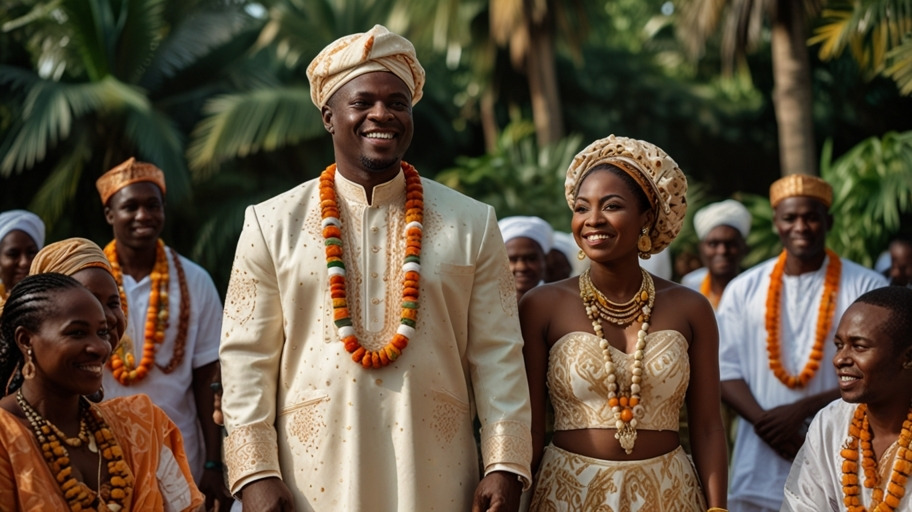
Comorian society has long been structured around a complex system of social customs known as "mada," which governs every aspect of life, from marriage and funerals to governance and decision-making. These customs are intertwined with Islam and reflect the islands' long history of cultural blending. The most significant of these traditions is the "Grand Marriage" (Arusi ya Daho), a lavish and highly symbolic ceremony that serves as a rite of passage for Comorian men and women and confers social status and prestige upon families.
The "Grand Marriage" is more than a personal celebration; it is a communal event that strengthens the social fabric of Comorian society. It embodies key cultural values such as solidarity, hospitality, and respect for elders. Despite its immense cost—which can bankrupt families—it is considered a vital investment in one's social standing and a key marker of cultural identity. Preserving this tradition is seen as essential for maintaining the cohesion of Comorian society, but it also raises questions about sustainability in the face of economic hardships and modernization .
Other customs, such as the respect for elders, the importance of family ties, and the central role of Islam in everyday life, continue to shape social relations in Comoros. These traditions offer a sense of continuity and belonging in a rapidly changing world. However , they are increasingly being challenged by external forces, particularly globalization, which brings new ideas, lifestyles, and values to the islands.
The Challenge of Modernization
Globalization and modernity have become double-edged swords for Comoros. On the one hand, they have brought undeniable benefits, such as improved access to education, healthcare, and communication technologies. The Internet, in particular, has connected the islands to the global community , providing opportunities for economic development and cultural exchange. Migration, both internal and external, has allowed many Comorians to seek opportunities abroad, especially in France, which has a significant Comorian diaspora.
On the other hand, these forces have also put tremendous pressure on traditional customs and ways of life. Urbanization is reshaping the social landscape, as more people move to cities in search of better economic opportunities. Younger generations are increasingly exposed to global culture, through music, fashion, and media, which often conflicts with traditional norms. The tension between maintaining a traditional way of life and adapting to the modern world is palpable, particularly among young people who feel caught between the two.
Furthermore, economic pressures, including widespread poverty and unemployment, make it difficult for many Comorians to adhere to costly traditions such as the "Grand Marriage." As more families struggle to make ends meet, some are questioning whether it is feasible to continue investing in These elaborate ceremonies, which can cost tens of thousands of dollars. Yet, abandoning such traditions losing risks a key part of Comorian cultural identity.
Language and cultural identity
Language plays a crucial role in the preservation of culture, and Comoros is no exception. The islands have three official languages: Comorian (Shikomori), French, and Arabic. Shikomori, a Bantu language with heavy Arabic influences, is the language of everyday communication and an important marker of national identity. French, a legacy of colonialism, is the language of government, education, and international relations. Arabic, the language of Islam, is used primarily in religious contexts and has also influenced Shikomori.
The dominance of French in education and government poses a challenge to the preservation of Shikomori, particularly among younger generations who are more likely to be educated in French. While most Comorians are bilingual or trilingual, the increasing use of French in formal settings has led some to fear that Shikomori may be marginalizing over time. Preserving and promoting the use of Shikomori is crucial for maintaining cultural continuity, but this is complicated by the need for Comorians to engage with the wider world through French and other global languages.

Efforts at Cultural Preservation
Despite these challenges, there are concerted efforts to preserve Comorian culture in the face of modernization. These efforts are being spearheaded by both government initiatives and grassroots movements.
One of the key governmental bodies involved in cultural preservation is the National Center for Documentation and Scientific Research (CNDRS), which focuses on documenting and preserving Comorian heritage. The CNDRS has worked to archive oral traditions, historical records, and artifacts that are central to the islands' cultural history. This includes the preservation of traditional music, dance, and craftsmanship, all of which are vital to the cultural identity of Comorians.
Cultural festivals, such as the International Festival of Comorian Arts, serve as platforms to celebrate and showcase Comorian traditions to both locals and tourists. These festivals often feature performances of traditional music and dance, such as "twarab," which blends African, Arab, and Swahili influences, and serves as a reminder of the islands' multicultural history. These events play a crucial role in passing on cultural knowledge to younger generations and reinforcing a sense of pride in Comorian heritage.
In the educational sphere, there are growing calls for the inclusion of more Comorian history, language, and cultural studies in school curricula. While French remains the dominant language of instruction, there are efforts to teach Shikomori alongside French and to integrate traditional knowledge into the educational system. This dual approach aims to equip young Comorians with the skills needed to succeed in the modern world while maintaining a strong connection to their cultural roots.
The Role of Islam in Cultural Preservation
Islam is deeply embedded in the fabric of Comorian society, and it plays a central role in the preservation of culture. Religious leaders, or "ulama," are key custodians of cultural traditions, and they are often at the forefront of efforts to maintain the islands' cultural and religious heritage. Islamic institutions, such as madrasas (religious schools), are important centers of learning where traditional values and cultural practices are passed down from one generation to the next.
The mosques of Comoros, with their distinctive Swahili-Arabic architectural style, are not only places of worship but also cultural landmarks. Preserving these architectural treasures is seen as essential for maintaining the historical and cultural landscape of the islands. Many of these mosques, some dating back centuries, are in need of restoration, and efforts are underway to preserve them for future generations.
Islamic traditions also intersect with secular customs, particularly in the realms of marriage, governance, and community life. The preservation of Islamic practices is seen by many as inseparable from the preservation of Comorian identity, as Islam has been a unifying force that transcends ethnic and linguistic differences on the islands.
Balancing Tradition and Modernity: A Path Forward
The future of cultural preservation in Comoros will depend on finding a sustainable balance between tradition and modernity. While modernization brings undeniable benefits, including economic development and improved living standards, it also threatens to erode the traditional values and practices that have long defined Comorian society.
One potential solution lies in promoting a form of "cultural modernity," where traditional customs are adapted to the realities of the modern world without losing their core significance. For example, some families are finding ways to scale down the costs of the "Grand Marriage" " without abandoning the tradition altogether., efforts to preserve the Shikomori language can be similarly complemented by embracing bilingualism, ensuring that Comorians are fluent in both their native language and global languages like French and English.
Technology can also play a role in cultural preservation. Digital archives, online platforms, and social media can be used to document and share traditional knowledge, music, and art with both local and global audiences. By embracing digital tools, Comorians can find new ways to keep their cultural heritage alive in a rapidly changing world.

Conclusion
Cultural preservation in Comoros is a delicate balancing act between holding onto the past and embracing the future. The islands' rich cultural heritage, shaped by centuries of interaction between Africa, the Arab world, and the broader Indian Ocean region, is a source of pride and identity for the Comorian people. Yet, the forces of modernization and globalization pose significant challenges to the continuity of these traditions.
The path forward for Comoros will require creative solutions that honor the past while adapting to the present. By promoting cultural education, preserving traditional customs, and embracing modern tools, Comorians can ensure that their unique cultural identity remains vibrant for generations to come. The future of the islands will depend on their ability to navigate the complexities of a rapidly changing world without losing sight of what makes Comoros unique.